- Home
- BIO-TYLODOX PLUS
Product Information
Composition & Formulation
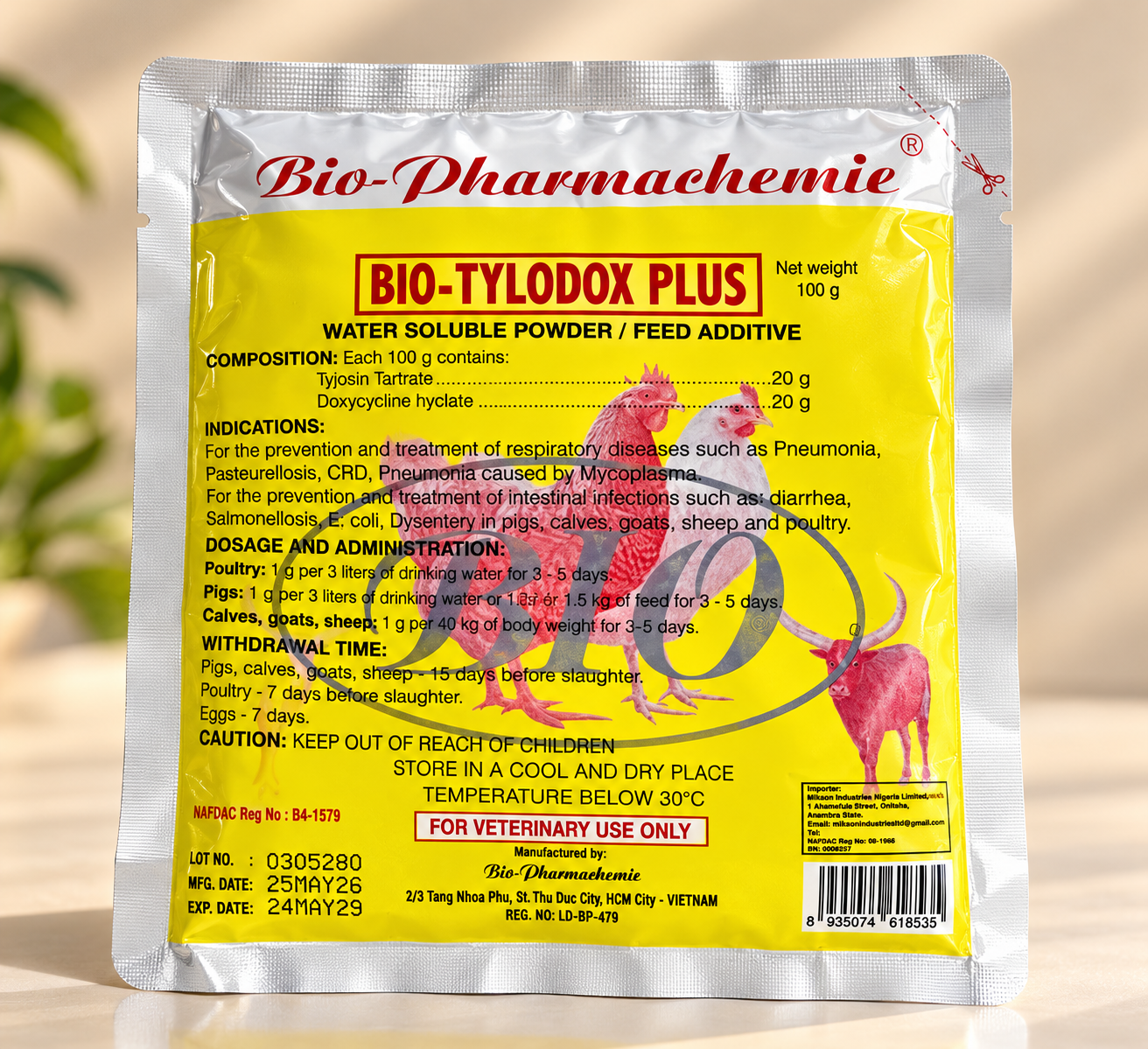
Each 100 g contains Tylosin Tartrate 20 g and Doxycycline Hyclate 20g.
Intended Uses
BIO-TYLODOX PLUS is labelled for the prevention and treatment of specified respiratory and intestinal infections in poultry, pigs, calves, goats and sheep.
Respiratory conditions listed on the packaging:
Pneumonia
Pasteurellosis
Chronic Respiratory Disease (CRD)
Pneumonia associated with Mycoplasma
Intestinal conditions listed on the packaging:
Diarrhoea
Salmonellosis
E. coli infections
Dysentery
Use only under appropriate veterinary guidance, taking account of the diagnosis and responsible antibiotic use.
Directions for Use
Dosage and Administration — As Stated on Product Packaging
Poultry: 1 g per 3 litres of drinking water for 3–5 days.
Pigs: 1 g per 3 litres of drinking water or 1 g per 1.5 kg of feed for 3–5 days.
Calves, goats and sheep: 1 g per 40 kg of body weight for 3–5 days.
These are the manufacturer's printed label directions, not an independently verified treatment recommendation. Consult a qualified veterinarian before administration to confirm suitability, diagnosis, and appropriate use.
Safety Information
Withdrawal Periods — As Stated on Product Packaging
Pigs, calves, goats and sheep: 15 days before slaughter.
Poultry: 7 days before slaughter.
Eggs: 4 days.
Storage and Precautions
For veterinary use only.
Keep out of reach of children.
Store in a cool, dry place at temperatures below 30°C.
Use under appropriate veterinary supervision and follow applicable antimicrobial-use requirements.
Registration Number Printed on Packaging: NAFDAC Reg. No. B4-1579.
The printed registration number and withdrawal periods should be checked against current regulatory requirements before public release.
WE'RE HERE TO HELP
Interested in This Product?
Need more information about this product, its availability, or supply options? Our Nigerian team is here to help you find the answers you need.
For product-specific guidance, always follow the approved label and consult a qualified veterinary professional when appropriate.